
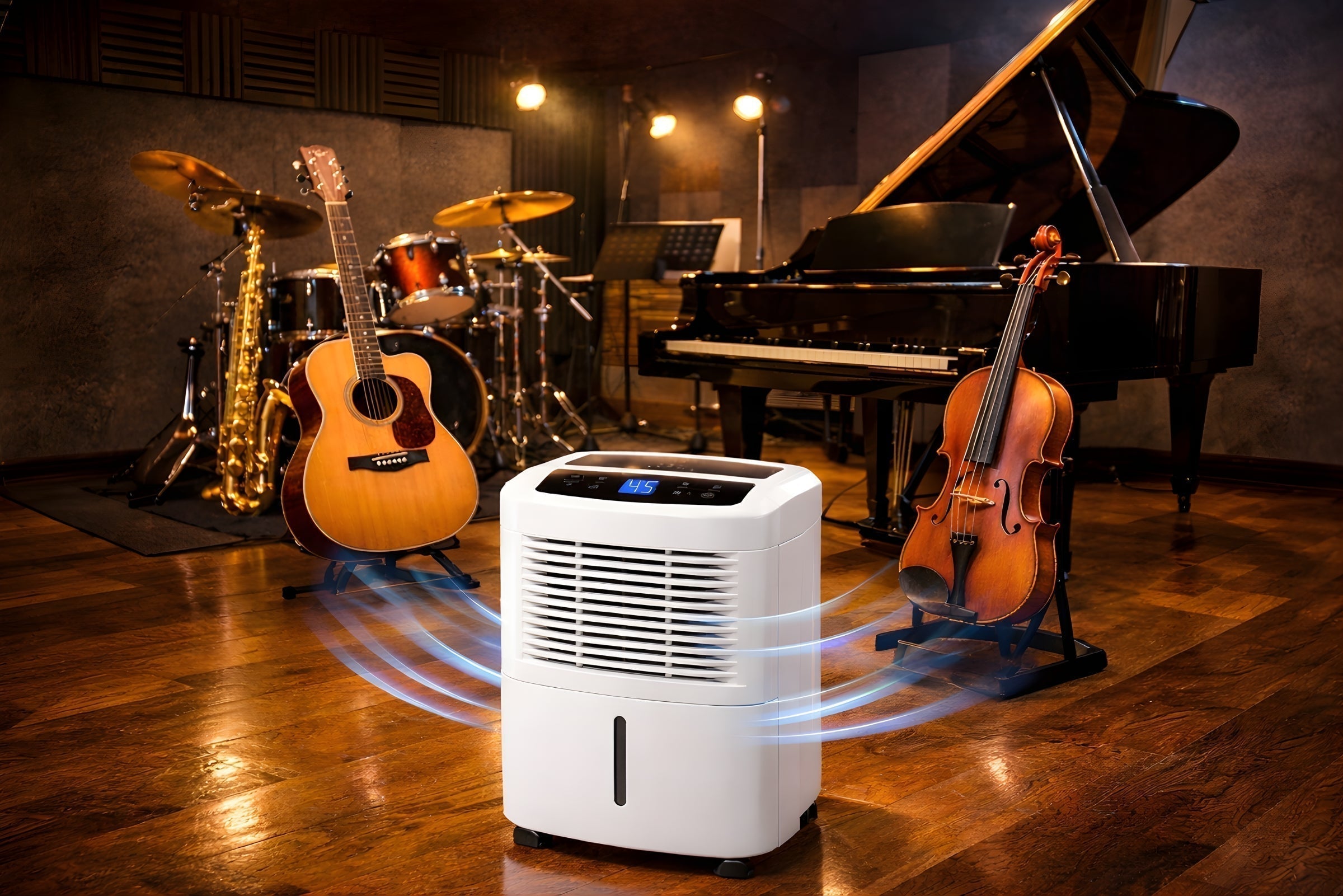
Musical instruments are not just tools. They are delicate works of craftsmanship. Whether it is a grand piano in a theatre, violins in a music store, guitars in a studio, or traditional instruments kept for performances, humidity control plays a crucial role in preserving sound quality and structural integrity. One of the biggest hidden threats to musical instruments is moisture in the air. Excess humidity slowly damages wood, metal, strings, pads, and finishes. Over time, this leads to tuning problems, dull sound, corrosion, mold, and costly repairs.
This is why Origin dehumidifiers are widely used in theaters, music stores, rehearsal rooms, recording studios, instrument storage rooms, and museums. They create a stable environment where instruments can stay in perfect playing condition for years.
Why is Humidity Dangerous for Musical Instruments?
Most musical instruments are made from wood, metal, leather, glue, and natural fibers. These materials that react strongly to moisture.
1. Wood expands and contracts
Wooden instruments such as guitars, violins, cellos, pianos, sitars, veenas, and flutes absorb moisture from the air. High humidity causes:
-
Swelling of wood
-
Warping and cracking
-
Loose joints and weak glue
-
Changes in tone quality
Even small humidity changes can alter how an instrument sounds.
2. Metal parts corrode
Brass, copper, steel, and iron parts are common in instruments. Moisture causes:
-
Rust on strings and tuning pegs
-
Corrosion in valves and keys
-
Sticky or jammed moving parts
This affects playability and increases maintenance costs.
3. Mold and fungus growth
High humidity encourages mold growth on:
-
Wooden surfaces
-
Leather pads
-
Instrument cases
-
Felt and cloth components
Mold not only damages instruments but also creates health risks for musicians.
4. Tuning instability
Humidity changes cause instruments to go out of tune quickly. This is a major issue in theaters and performance venues where consistency is critical.
How can Origin Dehumidifiers Protect Musical Instruments?
Origin portable dehumidifier removes excess moisture from the air and maintains an ideal relative humidity level usually between 40% and 50% which is perfect for most instruments.
1. Maintains structural stability
By keeping humidity stable, Origin portable dehumidifiers prevent wood from swelling or shrinking, preserving the original shape and strength of instruments.
2. Preserves sound quality
When materials remain stable, instruments produce consistent tone, resonance, and clarity. This is especially important for recording studios and concert halls.
3. Prevents rust and corrosion
Dry air protects metal strings, reeds, valves, and tuning mechanisms from moisture damage.
4. Stops mold and bad odors
Origin commercial dehumidifiers eliminate the damp conditions where fungus thrives, keeping instruments clean and odor-free.
5. Extends instrument lifespan
Proper humidity control reduces wear and tear, saving money on repairs and replacements.
Where are Dehumidifiers Used for Instrument Preservation?
1. Theaters and auditoriums
Large spaces with stage lighting, crowd presence, and varying temperatures can cause humidity fluctuations. Dehumidifiers help stabilize the environment for:
-
Stage instruments
-
Orchestra pits
-
Backstage storage
-
Dressing room instruments
2. Music stores and showrooms
Instruments on display are constantly exposed to air. Humidity control ensures:
-
Guitars do not warp
-
Pianos stay in tune
-
Brass instruments remain corrosion-free
-
Customers see instruments in perfect condition
This improves buyer confidence and product value.
3. Recording studios
Studios demand consistent acoustics. Humidity changes affect both instruments and sound absorption. Origin dehumidifiers help maintain sound clarity and equipment safety.
4. Instrument storage rooms
Whether it is a school, orchestra, or cultural institution, storage rooms need controlled humidity to prevent long-term damage.
5. Museums and cultural centers
Traditional and antique instruments require special care. Dehumidifiers help preserve historical value without altering materials.
How does a dehumidifier benefit Musicians and Institutions?
Using an Origin portable dehumidifier provides several long-term advantages:
-
Stable tuning
-
Reduced repair costs
-
Improved performance quality
-
Better sound consistency
-
Protection for expensive instruments
-
Healthier indoor air for performers
For institutions managing multiple instruments, humidity control becomes a necessity, not a luxury.
What are the Best Practices for Using Dehumidifiers with Instruments?
To get the best results:
1. Maintain 40–50% humidity
This range is ideal for most musical instruments.
2. Use dehumidifiers year-round
Humidity fluctuates across seasons, especially during monsoon and winter.
3. Avoid sudden humidity changes
Gradual control is better than extreme drying.
4. Ensure proper airflow
Do not store instruments in tightly sealed, damp areas.
5. Combine with regular maintenance
Humidity control works best alongside cleaning and proper storage.
What are some Common Instruments That Benefit from Origin Dehumidifiers?
-
Pianos
-
Violins, cellos, violas
-
Guitars (acoustic & electric)
-
Sitars, veenas, tanpuras
-
Flutes, clarinets, saxophones
-
Trumpets, trombones
-
Drums and percussion instruments
Each of these reacts differently to moisture, but all benefit from a controlled environment.
Conclusion: Dehumidifiers Are a Must for Instrument Preservation
Musical instruments are sensitive, valuable, and deeply connected to performance quality. Moisture silently damages them over time, affecting sound, appearance, and usability.
By using Origin commercial dehumidifiers in theaters, music stores, studios, and storage areas, you protect instruments from warping, rust, mold, and tuning instability. Stable humidity ensures consistent sound, longer lifespan, and reduced maintenance costs.
For anyone serious about music, whether a performer, store owner, or institution investing in a dehumidifier is one of the smartest steps toward preserving musical excellence.

Share:
How Dehumidifiers Help Preserve Books, Documents & Paper Archives From Moisture and Pests
Why Dehumidifiers Are Essential for Car Garages and Vehicle Protection