
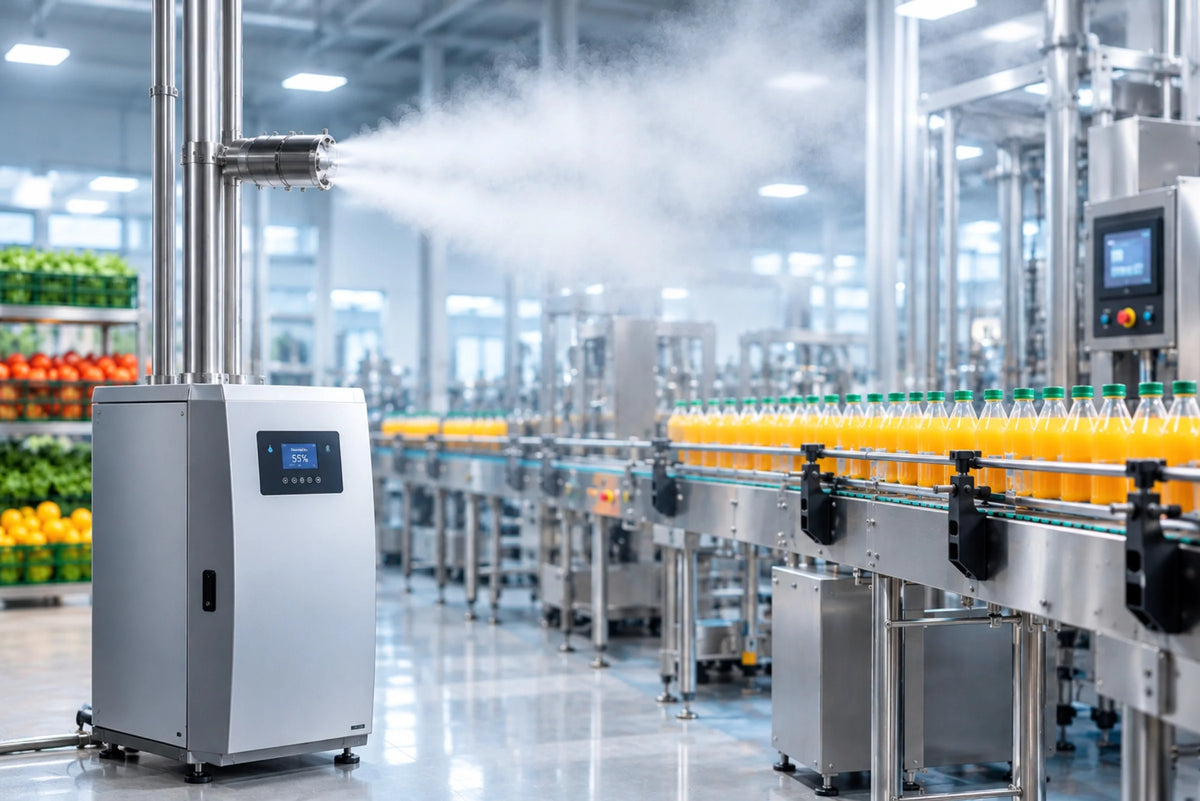
Why Humidity Control Matters in Food and Beverage Manufacturing
A batch of chocolate turns sticky. Powdered ingredients begin to clump. Condensation appears on the walls of a packing room. These problems may seem unrelated, but excess moisture in the surrounding air can contribute to all of them.
For food and beverage manufacturers, humidity is not just a matter of comfort. It can affect how ingredients are handled, how products move through production and how well finished goods hold their quality during storage.
Humidity control in the food and beverage industry helps manufacturers maintain suitable environmental conditions for their products and processes. Industrial dehumidifiers remove excess moisture from the air, helping address moisture-related problems in production, packaging and storage areas.
The right approach depends on what is being manufactured. A spice-processing unit, a chocolate production line and a refrigerated packing room will not necessarily need the same humidity levels or equipment.
In this guide, we look at where humidity becomes a problem, how dehumidifiers help and what manufacturers should consider when choosing a solution.
What Problems Can High Humidity Cause in Food Production?
The effects of high humidity depend on the ingredients, process and temperature of the facility. In some environments, the problem is easy to spot. In others, it becomes apparent only when production slows down or product quality starts to vary.
Ingredients that absorb moisture
Sugar, powdered seasonings, cocoa and other moisture-sensitive ingredients can absorb water from the surrounding air. Depending on the material, this may cause clumping, sticking or poor flow through processing equipment.
When powders stop flowing consistently, weighing, mixing and filling operations can become more difficult. Operators may need to intervene more often, and packaging lines may experience delays.
Condensation on cold surfaces
Condensation occurs when a surface is colder than the dew point of the surrounding air. In food facilities, this can happen on insulated panels, ceilings, pipes, refrigeration equipment and other cold surfaces.
Where condensation develops, manufacturers may face additional cleaning and maintenance requirements. In areas where exposed food or packaging is handled, managing moisture is particularly important.
Changes in product texture
Some products are sensitive to moisture even during relatively short periods of exposure. Crispy snacks may lose their crispness, powders may become sticky, and confectionery products may develop surface defects under unsuitable conditions.
Humidity is not the only factor involved, but it is one that manufacturers can measure and manage.
Difficulties during packaging and storage
Packaging areas often need consistent environmental conditions. Excess moisture can affect exposed ingredients and contribute to condensation around products or equipment.
The actual effect depends on the product, packaging material, temperature and length of exposure. Managing humidity can help reduce these risks, alongside suitable packaging, sanitation and storage practices.
How Industrial Dehumidifiers Help Food Manufacturers
Industrial dehumidifiers remove moisture from the air and help maintain the relative humidity required for a particular space or process.
In a refrigerant-based dehumidifier, humid air passes over a cold coil. When the coil is below the air's dew point, water vapour condenses and is collected for drainage. The air is then reheated before returning to the room.
This process gradually reduces the moisture content of the air when the equipment has sufficient capacity for the conditions.
For a food manufacturer, the benefit is practical: fewer moisture-related problems in areas where ingredients are exposed, more consistent environmental conditions and better control over condensation risks.
Dehumidification does not replace refrigeration, product moisture testing, cleaning procedures or appropriate packaging. It works alongside these measures as part of a facility's overall process control.
Where Does Humidity Control Make the Biggest Difference?
The need for dehumidification varies from one production area to another. Here are some applications where controlling moisture in the air can be particularly useful.
1. Chocolate and confectionery manufacturing
Chocolate is sensitive to both temperature and moisture. When water comes into contact with melted chocolate, it can cause seizing. Changes in temperature and moisture conditions can also contribute to surface defects such as bloom.
Humidity control helps manufacturers manage the surrounding environment, particularly in processing and packaging areas where temperature changes can lead to condensation.
However, dehumidification alone cannot prevent every chocolate defect. Proper temperature control, handling and storage remain essential.
2. Bakery products and sugar-based ingredients
Sugar-based ingredients, icing and certain bakery preparations can become sticky or difficult to handle when exposed to unsuitable humidity levels.
In production and preparation areas, controlled humidity can help maintain more consistent handling conditions. The appropriate setting will depend on the ingredients and the stage of production.
Cold storage and freezer applications require particular attention because conventional dehumidifiers may not be suitable for every low-temperature environment.
3. Coffee, spices and powdered ingredients
Coffee, spices, cocoa, soup mixes and powdered food ingredients can be sensitive to moisture during processing and storage.
When powders absorb moisture, they may form lumps, flow less freely or become harder to handle during filling and packaging. For products that rely on consistent aroma, texture or flow characteristics, these changes can create quality-control challenges.
Humidity management is particularly relevant in grinding, blending, weighing and packaging areas where ingredients are exposed to the surrounding air.
Origin already has a dedicated article on moisture control in food powder and masala manufacturing. Manufacturers looking specifically at spice and powder applications can read the Origin guide to industrial dehumidifiers for food powder manufacturing.
4. Cereal bars, grains and dry snacks
Cereal bars, grains and dry snacks have different moisture requirements, but each can be affected by unsuitable handling or storage conditions.
For example, moisture absorption may affect the texture of a dry snack or make certain ingredients harder to process. In cereal-bar production, the moisture characteristics of individual ingredients and the finished product need to be managed separately.
A dehumidifier can help control the surrounding air in suitable processing or packaging areas. Product moisture measurements and appropriate packaging are still necessary to maintain the required quality.
5. Seafood processing and cold rooms
Seafood facilities need careful control of temperature, sanitation and moisture. Condensation can develop when warm, humid air enters a cold environment or comes into contact with chilled surfaces.
Humidity management may help reduce condensation in suitable processing and packing areas. However, seafood safety depends on proper temperature control, cold-chain management and established food-safety procedures.
For refrigerated and freezer rooms, manufacturers should confirm that any proposed dehumidifier can operate at the required temperature.
6. Cheese processing and aging
Cheese is an important example of why simply lowering humidity is not always the answer.
Different varieties require different temperature and humidity conditions during aging. Reducing humidity too far can interfere with the intended aging process and product characteristics.
The objective should be to maintain the conditions specified for the particular cheese and process, rather than making the room as dry as possible.
7. Food packaging and storage facilities
Packaging and storage areas can experience changing humidity as doors open, outside air enters or production activities introduce additional moisture.
These fluctuations may affect exposed products and contribute to condensation on cold surfaces. The problem can be particularly noticeable in facilities that combine warm processing areas with refrigerated storage.
An appropriately designed dehumidification system can help manage the moisture load. Room layout, ventilation, door openings, temperature and drainage should all be considered when assessing the solution.
For a broader look at humidity management in storage and packing environments, see Origin's guide to dehumidifiers for warehouses and packaging.
How to Choose the Right Dehumidifier for a Food Facility
Choosing a dehumidifier starts with understanding the problem you are trying to solve. A unit selected only on the basis of room size may not provide enough moisture removal for a demanding production environment.
Before selecting equipment, consider the following factors.
-
Room dimensions and air volume: Record the room's floor area, ceiling height and layout. These details help establish the starting point for equipment sizing.
-
Required relative humidity: Identify the humidity range needed for the product or process. Different ingredients and production stages may require different conditions.
-
Operating temperature: Check the temperature at which the equipment will operate. Refrigerant-based units have specific operating limits, and performance can change as conditions change.
-
Moisture entering the space: Consider outside air, open doors, ventilation, wet processes, cleaning activities and moisture released by ingredients. These sources affect the capacity needed to maintain the target humidity.
-
Airflow and room layout: Equipment must circulate air effectively through the area that needs control. Obstacles, separate rooms and poorly distributed airflow can affect performance.
-
Drainage and maintenance: Check how condensate will be removed and whether the equipment is suitable for the facility's cleaning and maintenance requirements.
Exploring Origin's dehumidifier range
Origin offers portable and industrial dehumidifiers for a range of commercial and industrial applications. The appropriate model depends on the operating conditions, moisture load and required humidity level.
For food-processing facilities, it is important to confirm the rated moisture-removal capacity at the expected temperature and relative humidity rather than relying on room coverage alone.
You can explore the Origin industrial dehumidifier range or visit the professional-use page for information about industry applications.
If you are unsure which solution suits your facility, contact Origin at response@origincorp.com to discuss the application and equipment requirements.
Frequently Asked Questions
What is humidity control in the food and beverage industry?
It is the process of maintaining relative humidity within a suitable range for food production, processing, packaging and storage. The aim is to manage moisture-related problems that may affect ingredients, product quality and facility conditions.
Why do food manufacturers use industrial dehumidifiers?
Manufacturers use industrial dehumidifiers to remove excess moisture from the air. Depending on the application, this can help reduce ingredient clumping, manage condensation and maintain more consistent environmental conditions.
Can high humidity affect food packaging?
Yes. Excess moisture can affect exposed ingredients and contribute to condensation around products, equipment or packaging materials. The impact depends on the product, packaging type, temperature and exposure conditions.
Does every food-processing facility need dehumidification?
No. The need depends on the process, product sensitivity, existing ventilation and moisture conditions. A facility should assess its humidity levels and identify the source of the problem before selecting equipment.
What is the ideal humidity level for food manufacturing?
There is no single humidity level suitable for every food product. The required range depends on the ingredients, process stage, operating temperature and storage requirements. Manufacturers should establish targets based on their specific process needs.
Can dehumidifiers help prevent condensation in cold rooms?
They can help manage airborne moisture when the equipment is suitable for the operating conditions. However, cold rooms also require attention to door openings, temperature differences, air infiltration and surface temperatures. Equipment must be rated for the actual room temperature.
How do I select the right industrial dehumidifier?
Start with the room dimensions, target humidity, operating temperature and sources of moisture. Then compare equipment based on its rated extraction capacity under similar operating conditions, airflow, installation requirements and maintenance support.
Final Thoughts
Humidity problems in food manufacturing do not always begin with an obvious failure. Sometimes they show up as ingredients that no longer flow properly, products that lose their intended texture or condensation that keeps returning to the same area.
Identifying the source of the moisture is the first step towards addressing these problems. In suitable applications, industrial dehumidification can help manufacturers maintain more consistent conditions and reduce the operational challenges associated with excess moisture.
The right solution depends on the product, process and facility. Taking the time to assess those requirements helps ensure that the selected equipment addresses the actual problem rather than simply lowering humidity without a clear objective.
To discuss humidity control for your food-processing or storage facility, contact the Origin team at response@origincorp.com.

Share:
Humidity Control for Art Galleries and Museums: Why Dehumidifiers Are Essential