
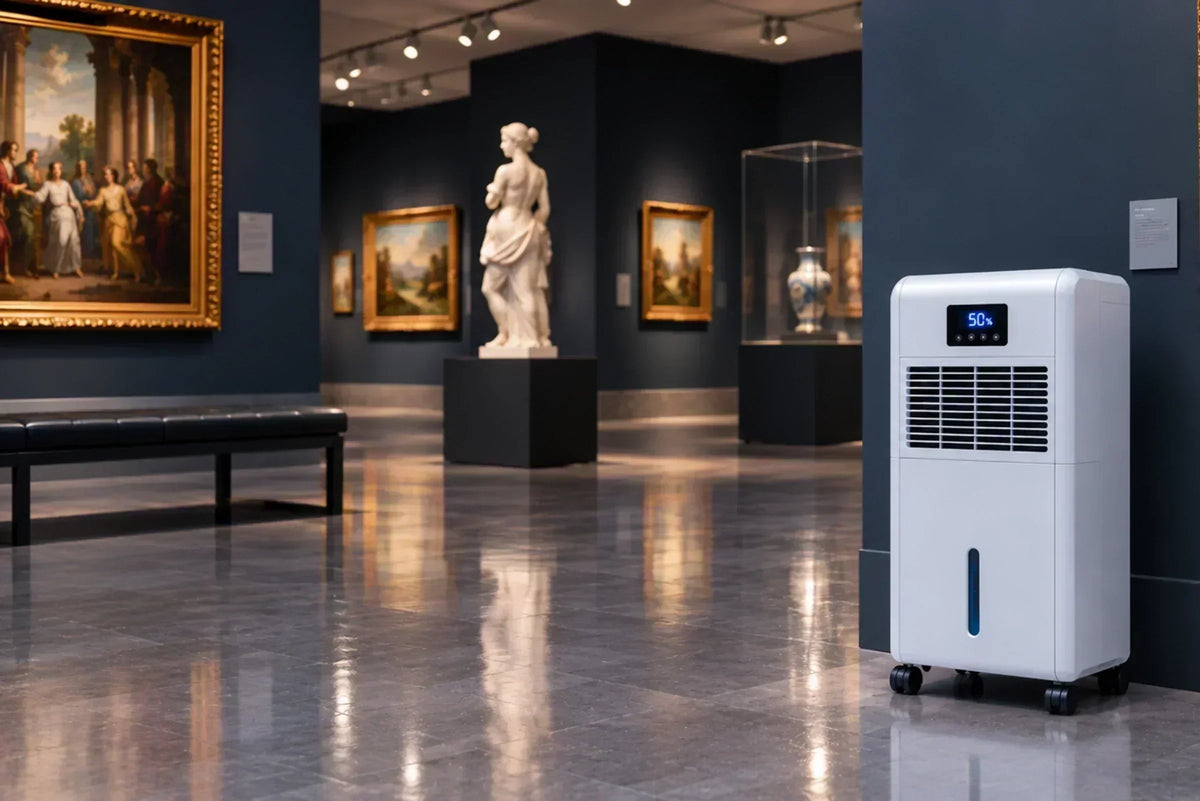
Walk into any world-class gallery or museum and you'll notice something beyond the art itself: a carefully controlled atmosphere. Behind the scenes, humidity management is one of the quiet, unglamorous factors that determines whether a painting survives for decades or begins to deteriorate within a few humid seasons.
In short: humidity control for art galleries, museums, and archives relies on dehumidifiers to maintain stable relative humidity typically preventing the mold growth, corrosion, warping, and material degradation that damage paintings, textiles, paper, metal, and film over time.
For curators, conservators, and facility managers, understanding why humidity control matters and how dehumidifiers actually do their job is essential to protecting irreplaceable collections.
Why Humidity Is a Silent Threat to Art
Artworks, especially paintings, sculptures, and other delicate materials, are highly sensitive to fluctuations in humidity. Canvas expands and contracts, wood warps, paper yellows and grows brittle, and metal begins to corrode all triggered by moisture levels that swing too high or too low. Left uncontrolled, this slow damage can compromise pieces that are often impossible to replace.
That's why controlling humidity isn't a maintenance afterthought it's a core part of preserving the quality and lifespan of any collection.

Where Humidity Control Matters Most
Art Galleries Galleries need stable, even coverage across open exhibition spaces. Staff should strategically position dehumidification units and select the appropriate capacity based on the size and layout of the space, ensuring no corner of the gallery is left exposed to damp air.
Museums Museums face a broader challenge: textiles, paper, wood, and metal artifacts all react differently to moisture. Effective humidity control helps museums:
-
Prevent mold, mildew, and fungal infestations
-
Preserve historical documents and manuscripts from yellowing and brittleness
-
Protect paintings, drawings, and sculptures from warping and cracking
-
Reduce corrosion on metal artifacts and coins
-
Discourage pests that thrive in humid conditions
-
Safeguard textiles, clothing, and audiovisual equipment
-
Create specialized microenvironments for exhibits with unique requirements
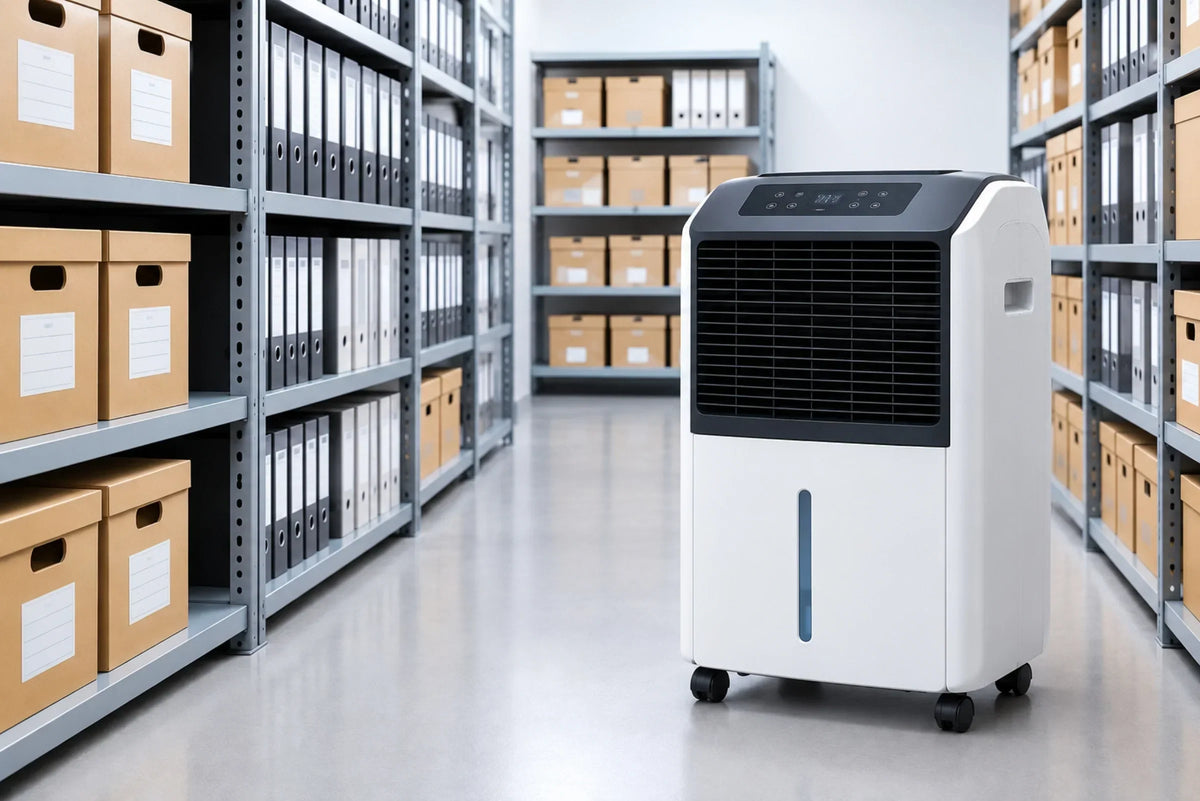
Archives Archives carry their own preservation priorities particularly paper, photographs, film, and electronic media. Stable humidity prevents:
-
Deterioration of documents and rare books
-
Damage to photographic prints, negatives, and film reels
-
Corrosion of stored metal objects and machinery
-
Data loss on floppy disks, CDs, and other digital storage
-
Mold growth on historical textiles and fabrics
Secured Art Storage For facilities storing valuable, often irreplaceable artworks, humidity control does more than prevent mold it prevents condensation on artwork surfaces caused by temperature variation, protects wooden frames and sculptures from warping, and maintains the stable climate needed for long-term preservation.
How Dehumidifiers Actually Work
Portable dehumidifiers operate on a simple but effective principle:
-
Air is drawn in and blown over a cold evaporator coil, typically maintained at around 3–4°C below the dew point causing moisture in the air to condense.
-
The collected moisture is removed from the airstream and piped out of the system.
-
The same air then passes over a hot condenser coil, which restores the heat removed earlier, releasing dry air back into the room at close to its original temperature.
The result: consistently lower relative humidity, without dramatically altering room temperature exactly what sensitive collections need.
The Business Case: Protection Is Profit
For galleries, museums, and storage facilities, dehumidifiers aren't just protective equipment they're an investment in the long-term value of a collection. Preventing mold, corrosion, and material breakdown protects both the cultural and financial worth of every piece on display or in storage, while reducing the cost and risk of restoration down the line.
Choosing the Right Dehumidification Solution
Not every space has the same needs. Factors to consider include:
-
Room size and layout: larger or open-plan galleries may need multiple units positioned for even coverage
-
Material sensitivity: paper, textiles, and metal each have different ideal humidity ranges
-
Customization: advanced units with adjustable settings allow different zones or exhibits to maintain their own microclimate
-
Reliability and after-sales support: consistent performance matters most in spaces where damage can't be undone
Whether you're managing a single exhibition room or an entire archive, the right humidity control setup protects your collection today and preserves its value for generations to come.

Frequently Asked Questions
Why is humidity control important for art galleries?
Humidity control prevents artworks from warping, cracking, or growing mold. Paintings, sculptures, and paper-based pieces react to moisture in the air, so keeping relative humidity stable protects both their condition and their long-term value.
What humidity level is ideal for museums and galleries?
Most conservation standards recommend keeping relative humidity in a stable range (commonly around 45–55%), avoiding sudden swings rather than targeting one fixed number. Dehumidifiers help hold that range consistently across a space.
How does a dehumidifier protect artwork?
A dehumidifier draws in air, cools it below the dew point over an evaporator coil so moisture condenses out, then reheats the air over a condenser coil before releasing it back into the room. This lowers relative humidity without significantly changing room temperature.
Do archives need dehumidifiers too?
Yes. Archives storing paper documents, photographs, film, textiles, and electronic media are highly sensitive to humidity, which can cause yellowing, brittleness, mold, and corrosion. Dehumidifiers are essential for long-term archival preservation.
Can one dehumidifier cover an entire gallery?
It depends on room size and layout. Larger or open-plan spaces typically need multiple units positioned strategically for even coverage, while smaller rooms or storage areas may only need one appropriately sized unit.
Interested in finding the right dehumidification solution for your gallery, museum, or storage facility? Get in touch with our team for a consultation.

Share:
Why an Origin Dehumidifier is Essential for Archive Rooms and Record Storage Rooms